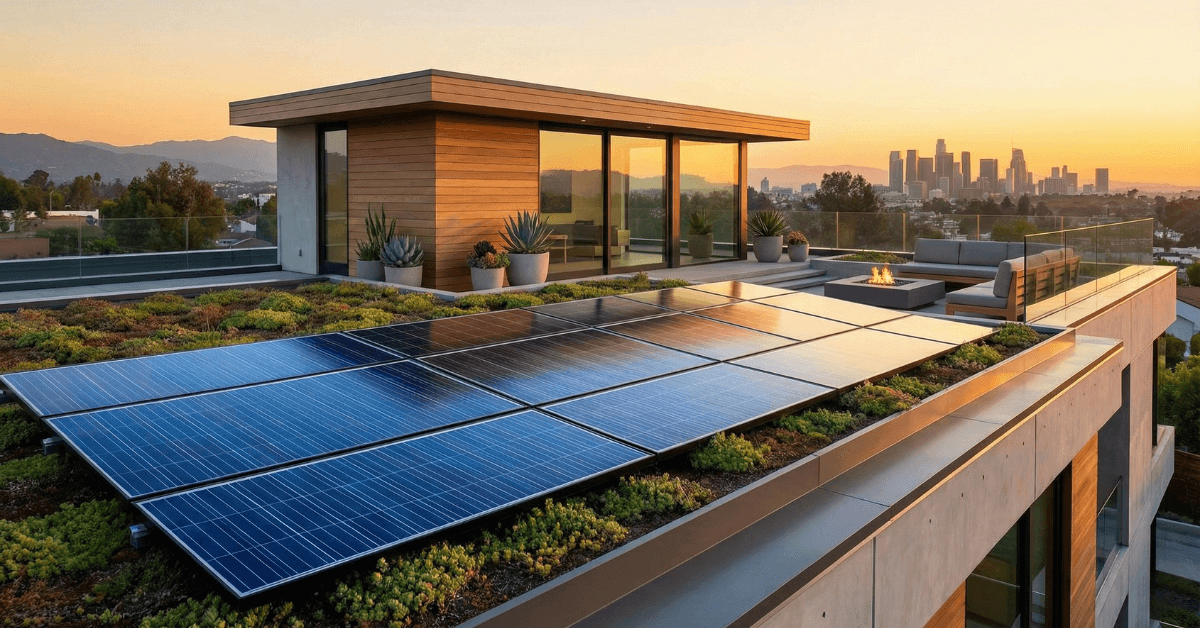
Photovoltaic systems are now not just a modern trend but a strategic choice that leads to lower expenses, greater energy independence, and higher property value. They are among the fastest-developing energy solutions in the world – for residential, commercial, and industrial buildings.
In this article, we look at the most important advantages solar systems offer as one of the best long-term investments.
1. Significant reduction in electricity expenses
Long-term lower bills
One of the greatest advantages of photovoltaic systems is the noticeable decrease in monthly electricity costs. A properly designed system can cover between 50% and 100% of daily consumption, depending on the installation’s capacity and type.
Predictable electricity price
As the traditional electricity price rises, solar energy remains free after paying off the installation. This is a significant advantage when planning expenses.
Return on Investment
Typically ROI varies between 3 and 7 years, depending on:
-
type of object
-
consumption
-
existing incentives or subsidies
-
selected components
Following this period, the system operates in net positive.
2. Energy Independence and Security
Less Dependence on Energy Deliveries
With a photovoltaic system, you have greater autonomy and less dependency on fluctuating electricity prices and the risk of disruptions.
Options for Battery Systems
If the installation includes battery storage, you can:
-
use your own power overnight
-
cover peak demand periods
-
have backup storage in emergencies
This is particularly crucial for businesses that cannot afford interruptions.
3. Increased property value
Higher appraisal when selling
Properties with installed photovoltaic systems are usually sold faster and at a better price.
The reason is simple: future owners receive an object with lower maintenance costs.
Higher energy efficiency
In many countries, the systems increase the energy class of the building – an important factor in evaluation and financing.
4. Ecological benefits and sustainability
Reduced carbon emissions
Solar energy is clean, renewable, and does not create harmful emissions.
On average, a solar system reduces the carbon footprint by ton CO₂ annually.
Enhances corporate image
For businesses, this is a powerful PR factor:
Clients expect modern companies to invest in sustainability and ecology.
Compliance with future regulations
The green transition is already a global standard. Your solar systems prepare you for future ecological requirements.
5. Long life, minimal maintenance, and high reliability
Life over 25 years
Modern panels have a life between 25 and 30 years, while inverters — between 10 and 15 years.
Minimal maintenance
Besides regular cleaning and checks, the system does not require complex maintenance.
Stable performance
Tier-1 panels lose only about 0.5% efficiency annually, ensuring long-term durability.
When is the most suitable moment to install a solar system?
It is best when:
-
You have stable consumption
-
You own your roof or land
-
Seek lower bills and higher predictability
-
Think about the future — ecology, independence, sustainability
The earlier you install the system, the sooner it starts paying off.
How much does the construction of a photovoltaic system cost?
The price depends on:
-
the system’s power
-
the type of panels and inverter
-
the installation complexity
-
if there is a battery
Standard prices for quality systems start from 5,000 – 8,000+ BGN for residential solutions.
Conclusion
Photovoltaic systems are one of the most sensible long-term investments for homes and businesses.
They provide:
-
lower electricity bills
-
greater independence
-
minimal maintenance
-
greater property value
-
ecological benefits
With proper design and quality installation, the system operates flawlessly for decades.
If you are considering building a solar system, Solar Nova Pro’s team can help you with professional consultation and individual solution for your property. Send an inquiry through the form on the website.